


Our Brains Are Made for Restoration
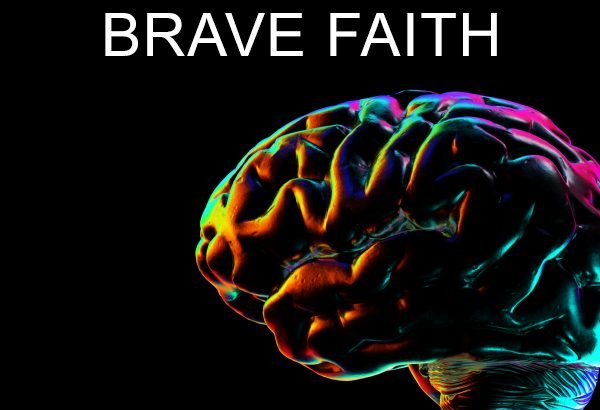
This is how God designed us. We are not the sum of our past, not even our ugly sinful past. Our brains literally are designed to change us inside and out. Our brains are made for restoration.
Surrendering to God biologically changes you.
Restoration is the heart of God. God didn’t just design our souls to be redeemed. He also designed our brains to be renewed and rebuilt no matter what we’ve done with our lives or what patterns we’ve formed along the way. This is the beauty called neuroplasticity.
A neuron is a specialized cell in the brain that sends and receives information through electrical and chemical signals. It’s the basic building block of how you think, feel, decide, love, remember, and communicate. And you have billions of them.
Neuroplasticity is the brain’s ability to change and adapt by forming new connections or reorganizing old ones in response to learning, experience, or even injury.
The Bible has been saying this long before neuroscience caught up. Instead, let the Spirit renew your thoughts and attitudes. Put on your new nature, created to be like God—truly righteous and holy. Ephesians 4:23–24. Do you see that verse a bit differently now? And are amazed?
Does that give you hope for the places you feel stuck—or does it feel too good to be true?
The human brain contains somewhere between 85 billion and 200 billion neurons, depending on age. The brain starts to grow very rapidly 21 days after conception and into early childhood. We add new neurons rapidly in the first few years of life and during adolescence.
When I was young in youth ministry and receiving my education, I was taught that the teen brain had stopped growing. This explained why teenagers made so many risky or impulsive decisions. That turned out to be faulty science. Teens don’t make risky choices because their brains aren’t growing but because they are growing and growing so rapidly.
During adolescence, the brain is under massive construction. The frontal lobes—responsible for decision-making, impulse control, and emotional regulation—are still developing and not yet fully connected to the rest. They lack the myelin coating that allows different regions of the brain to communicate efficiently.
That’s one of the reasons why I love teenagers so much. Their decisions matter. Their brains are forming. Their choices are shaping neural pathways that will influence the rest of their lives. I want to influence that.
Neurons don’t operate in isolation. They form networks connecting with nearby neurons and with distant regions of the brain and nervous system. Neurons that are used grow stronger connections. Neurons that aren’t used tend to wither and die. By our sixties or seventies, we’re closer to that lower number of neurons—not because growth stops, but because unused pathways are pruned away. Hello, age.
I’m now that youth pastor who loves teens who is also losing neurons.
Neurons that fire together wire together. The ones you use grow stronger. The ones you ignore fade away through a process called pruning. Formation takes time. Repetition matters.
Every choice you make is shaping your brain. You have the free will to make your choices.
Neural pruning and linking is happening right now as you read this–organizing what you’re learning so it can be recalled later. This is why repetition matters. Formation takes time.
Think about habits. If you have the habit of doing daily morning yoga, that’s a well-worn neural pathway. If every evening you walk to the freezer, grab ice cream, and eat it, that pathway gets reinforced. You can “use it or lose it”–and you can also change it, but only with intentional repetition (another phrase for time).
And this is where hope enters.
God did not design your brain to stay stuck. God designed it for restoration.
That is amazing. God designed us to grow and heal and be more like Jesus. You have a chance.


Comments
Trackbacks & Pingbacks
[…] the very beginning, God created restoration as part of our souls and bodies. Practices of trust, surrender, and relational faith are associated with measurable biological […]
[…] fire together wire together. Change is possible. God’s heart is restoration and God designed our brains to be restored. That beautiful design is called […]