


People Are a Part of Our Brain Growth
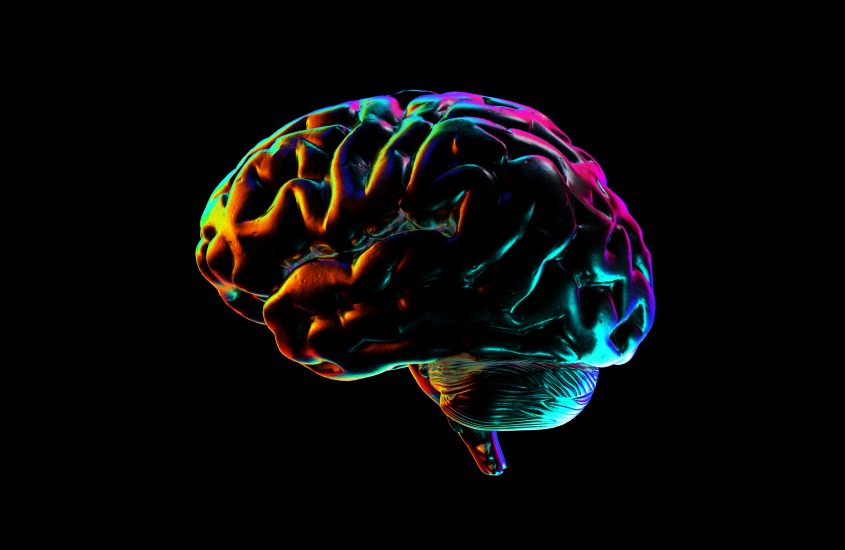
Trusting God and resting in God’s love shifts our brains out of constant stress and survival mode. It creates safety, and safety allows the brain to heal from patterns of fear and shame. We have the God-given authority to lead our brains. To learn God’s love, to learn that God is trustworthy, and to move our bodies into safety involves relationships with people. Yes, people. People are a part of our brain growth and spiritual formation.
Connection with people literally helps the brain settle.
This is why being seen, heard, and responded to with care can regulate stress more effectively than logic or self‑talk. Read why explicit beliefs don’t always lead to change.
We are formed—and re‑formed—not just by what happens to us, but by WHO is with us when it happens.
From infancy through adulthood, our nervous systems are constantly reading and responding to other nervous systems. Safety is not something we manufacture alone. Often, it’s borrowed—from someone who is calm, attentive, and emotionally available.
God designed our brains with what scientists call mirror neurons which are brain cells that activate both when we perform an action and when we observe someone else performing that same action. These neurons are thought to support learning through imitation and may help us understand and attune to the emotions and intentions of others. While researchers are still studying exactly how they function, mirror neurons are believed to play a role in empathy, social connection, and relational learning.
Mirror neurons also pick up on stress and anxiety. We get both the good and the bad from people. So choose wisely who is amongst your gift of people.
Faces matter. These mirror neurons are scanning for faces.
For example, when you enter a crowded room your brain scans for someone who recognizes you. When you find that face, you feel relief. Joy replaces the anxiety. The crowd feels manageable. You may even feel a bit of vanity as you wind your way through the crowd to the face who is smiling at you. You belong here because of this face.
When you feel lonely, you feel unseen. Notice the absence of faces in loneliness. This is the absence of mirror neurons. Loneliness also lies (read this article again with this insight.)
Saul would not have become the Paul we learn from and who wrote all those letters if it wasn’t for Barnabus.
When Saul arrived in Jerusalem, he tried to meet with the believers, but they were all afraid of him. They did not believe he had truly become a believer! Then Barnabas brought him to the apostles and told them how Saul had seen the Lord on the way to Damascus and how the Lord had spoken to Saul. He also told them that Saul had preached boldly in the name of Jesus in Damascus. So Saul stayed with the apostles and went all around Jerusalem with them, preaching boldly in the name of the Lord. Acts 9:26-28.
The Saul reference is Paul’s original name so this story takes place quite early in the making of Paul. The notorious Saul, who wanted to kill all in this Christian movement, came to Jerusalem to be received as a new follower of Jesus. Saul’s face is scanning the crowd for who is going to believe him and who is not. In that crowd was also Barnabas, the same friend Saul traveled with to Jerusalem and who discipled him. In modern language, we might say Paul was borrowing Barnabas’ calm and affirmation.
The mirroring continued for Paul. Paul stayed in Jerusalem to preach boldly. He was able to mirror the apostles at this early formation time in his life.
Barnabas became a regulating presence for Paul, especially in those tense times, a face that helped him remember who he was becoming.
We could call this discipleship. Discipleship is not transactional. It is not “do the right things.” It is relational.
“Maybe the issues of the gospel message aren’t debt, shame, penalties, or violations of the law. Maybe the issues of the gospel message are being restored to relationship.” –Brenda Seefeldt Amodea, The Story of Two Lost Sons, p. 9
(This is a small book to help you or someone you love who is confused about God’s love towards them. This is priced and sized to be given away in bulk.)
There is more. Our right brain contains a control center that integrates who we are with who our people are. The orbital prefrontal cortex (on the right side of the brain behind the eye) is dominant for integrating my current situation in life with who I am measured in real time. Moment by moment our right brain tries to answer the questions: “Who am I?” and “How do my people act now so I can mirror my people?”
When that system is synchronized, we act with joy and peace and maybe a little vanity. When that system is disrupted, we forget who we are. We stop acting like ourselves.
Have you ever been in a group of new people and said or did something that was very very very dumb? When you got home and felt the regret you have said to yourself, “Who was that person?” This is that. And you know that feeling of regret.
Group identity forms character by things like mirror neurons and reward pathways, scanning the crowd for those faces who agree with us, like us, and see us. Over time, the group’s norms of what is praised, what is frowned upon, how belonging is maintained get reinforced in our brains as habits and expectations. Over time, repeated reinforcement shapes our habits and expectations, so that honesty, generosity, or even racism can start to feel “normal,” all depending on the influence of the group we belong to. You see it, don’t you?
Implicit beliefs are formed and healed through experience. Not by information alone, but by encounters that rewrite the story underneath. Healing implicit beliefs is a process of bringing what is hidden into the light and allowing God to reshape it. This happens with people–in kitchens, therapy offices, coffee shops, churches. We are saved relationally. We are formed—and re-formed—not just by what happens to us, but by who is with us when it happens. Our brains strengthen when mirrored by safe, trustworthy people.
Who we belong to shapes who we become. This is what your mom told you. This is what every wise adult has told you. This is also science.
This involves people, Dang, people. And thank God for people!
We are formed—and re‑formed—not just by what happens to us, but by who is with us when it happens. I love this thought. I can see the faces of those who formed and re-formed me. I am so grateful for them, these people who have faces and make my heart swell.
Comments
Trackbacks & Pingbacks
[…] is where our mirror neurons come online. Guilt moves us toward people, not away from them. It points out where we’re acting […]