


We Don’t Need More Weed Killers
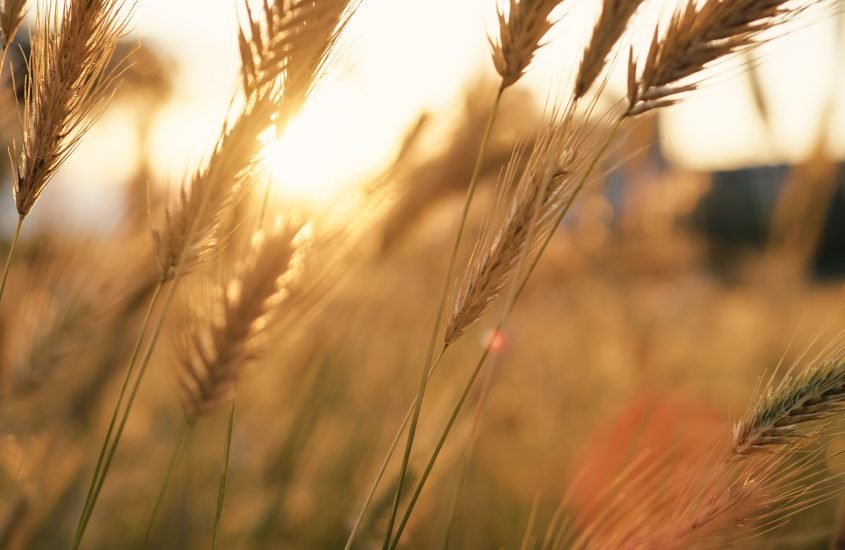
Jesus taught this parable of the wheat and the weeds and I believe it has some things to teach us about the anxiety of today. Our anxiety is leading us to want to be weed killers because life hurts enough.
Here is another story Jesus told: “The Kingdom of Heaven is like a farmer who planted good seed in his field. But that night as the workers slept, his enemy came and planted weeds among the wheat, then slipped away. When the crop began to grow and produce grain, the weeds also grew. The farmer’s workers went to him and said, ‘Sir, the field where you planted that good seed is full of weeds! Where did they come from?’ ‘An enemy has done this!’ the farmer exclaimed. ‘Should we pull out the weeds?’ they asked. ‘No,’ he replied, ‘you’ll uproot the wheat if you do. Let both grow together until the harvest. Then I will tell the harvesters to sort out the weeds, tie them into bundles, and burn them, and to put the wheat in the barn.’” Matthew 13:24-30.
There are news headline days when you want to power over and pull out the weeds right now. We must do something! You feel the problem. Heartbreak is a holy gift–an invitation from God. Heartbreak is a signal to you that you’ve stumbled upon something worthy of your life. This is why those news headlines are triggering you.
What I mean by power over is using coercion, force, control, status, wealth, influence, and the ability to make others do what you want. From the beginning of human history, we have assumed that if we can gain enough power over others, we can create the outcomes we desire. Yet Jesus came announcing a kingdom built on an entirely different foundation.
The difference between the Kingdom of God and the kingdoms of this world comes down to the kind of power we trust. The Kingdom of God operates through power under.
Jesus had lots of power, possessed all authority in heaven and on earth, had enough power to lay down his life and take it up again, yet he consistently refused to use his power to control people. He did not force belief. He did not manipulate loyalty. Coercion doesn’t produce love. Grace does. Jesus did not call down armies to eliminate his enemies. Instead, Jesus used his power to serve, heal, restore, forgive, and ultimately lay down his life.
Jesus said let the weeds continue to grow amongst you good wheat.
This is a difficult teaching of Jesus because it runs against our instincts. We want immediate resolution. We rightly want justice now. We rightly want evil stopped today.
Yet Jesus describes a world where wheat and weeds grow side by side. Goodness and evil. Mercy and cruelty. Truth and deception. Joy and sorrow. Hope and heartbreak.
Jesus never pretends evil does not exist. Hevel (the Hebrew word for meaningless that is a lot more like dung) is still here. Jesus never minimizes suffering and Jesus never asks us to ignore injustice.
In fact, the entire parable begins with the acknowledgment that an enemy has done real harm. Something precious has been threatened and something good has been violated. There is an enemy. There is evil. Do not forget that.
But the presence of evil does not relieve us of our responsibility to continue growing what is good.
The existence of hatred does not excuse us from practicing love. The spread of deception does not excuse us from telling the truth. The persistence of injustice does not excuse us from pursuing justice. The field still needs tending. The wheat still needs growing. The world still needs people committed to goodness.
Choosing goodness isn’t weakness. It’s resistance.
Choosing goodness is refusing to let the evil around us decide who we become. –Brenda Seefeldt Amodea
Notice that the farmer does not deny the existence of weeds. Nor does he abandon the field because weeds are present. The field remains worth tending and the wheat remains worth cultivating. Life itself remains worth nurturing.
The weeds are real. Evil is real. We cannot control the entire field. We are being asked to not be weed killers. So what will we choose to cultivate?
In the midst of hevel growing besides us, we find rootedness in God. This leads us to commit to goodness because we are rooted in something everlasting, has no end, larger story God.
This commitment to goodness can be seen in another layer of the farmer’s patience that can be easy to overlook. God refuses to uproot the weeds immediately. Again and again, God delays judgment because God’s heart is restoration.
The weeds remain not because evil is acceptable, but because grace continues extending an invitation. Every day that evil remains is another day that transformation remains possible. Every day judgment is delayed is another opportunity for repentance.
The parable ends with a harvest. Jesus is clear that justice is coming. The weeds do not remain forever. The suffering of the vulnerable is not ignored forever.
Let’s make a commitment to goodness.
God’s eyes are on the wheat. So should ours. We should be focused on growing more wheat, not focused on being weed killer.
Read also: We Need the Weeds for Growth, another uncomfortable twist on this Parable of the Wheat and the Weeds.



Comments
Trackbacks & Pingbacks
[…] We Don’t Need More Weed Killers […]