
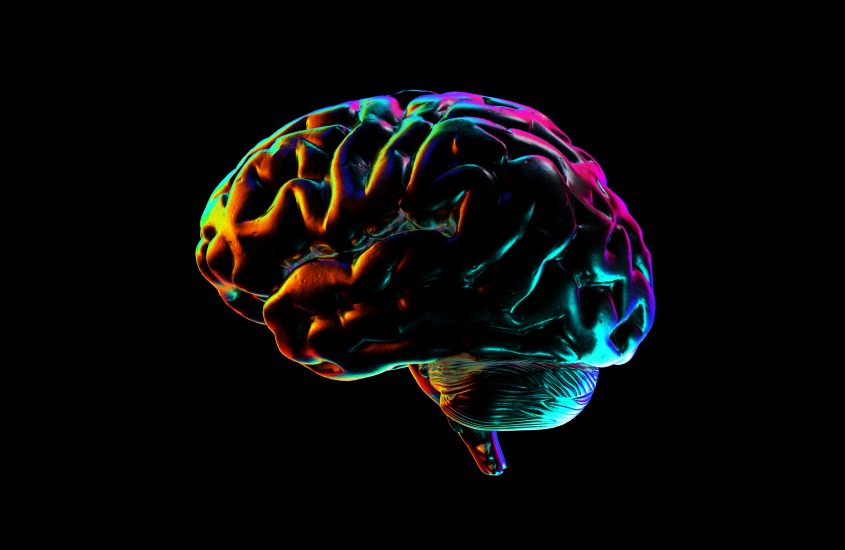
Holy Tension in the Brain
Accidentally found this study: In 2007, researchers told hotel housekeepers that their daily work exceeded the Surgeon General’s recommendations for exercise. That’s it. No change in behavior. Just a change in belief. Four weeks later, the informed group had lost weight, reduced body fat, and lowered their blood pressure. The control group, doing the exact same physical work, showed no changes. Belief can influence physiology, even without obvious, intentional behavior change. Not through behavior. Through perception alone. Source.
Belief can influence physiology. Actual physiology.
And if belief can do that in the body it’s not a stretch to imagine belief shaping something even deeper in us. The stories we carry–about ourselves, about God, about what is true–aren’t sitting quietly in the background. They are forming us, often without our awareness.
So when those internal stories collide with the values we’ve inherited or absorbed, it doesn’t just feel uncomfortable, it’s revealing something. It’s showing us where belief is at work, and where it might need to be examined—or reshaped. Maybe where we need to grow.
God loves to watch his creation grow. Our brains are designed to grow and to restore.
If the most important thing in life is the person you become, then growing is one of the hardest things you will ever do. Because growth asks you to question what you’ve always assumed is true.
When our two libraries of life history and the values of our people are in dissonance we have a chance to grow. That dissonance or holy tension creates space for discernment where we can choose which stories shape us and which ones we release.
For example, you are introduced to the Biblical ethic to not have sex outside of marriage.
Your library up to this point is that it is normal to have sex outside of marriage. This has been reinforced with family, friends, television, movies, porn.
Your library is challenged by someone in your life whom you trust and explains the Christian perspective on sexual behavior. You like this person. This is the value of that person. You trust the face of this person and that changes how you hear the message.
Your prefrontal cortex now has to try to resolve competing loyalties. You want to believe this because of this group of people and it is what you have always known. But this other group of people believe something else and it has logic and relationship attached. This is holy tension. This is brain growth, changing your neuropathways. The discomfort, as well as repetition and reinforcement, is giving you a chance to grow.
What will you decide? Because you get to decide.
Our brains interpret messages through the emotional relationship we have with the messenger. Truth delivered within trustworthy love lands differently than from an untrustworthy person. The more trust there is, the more growth is possible. The more you trust me, the more I can challenge your brain. So says this author and pastor.
Jesus changed his disciples’ brains by offering a new life within the context of God’s trustworthy love. Our brain develops optimally inside trustworthy love.
Maybe this is why I have lost so many friends over the years. Maybe one reason why is they have felt the holy tension, didn’t want to grow in the way of Jesus, so to avoid the holy tension, I had to be out of their lives.
Remember those mirror neurons? We were never designed to heal, grow, or become whole in isolation. God formed our brains for relationship–with God and with one another–so that who we belong to shapes who we become. Loneliness distorts our perception, interrupts growth moments. But presence restores it. Safe faces, trustworthy love, and shared life help our nervous systems settle and our identities come back online.
This is how discipleship actually works: not through pressure or performance, but through relationship that tells the truth while holding us close. We are changed not just by what we believe, but by who is with us as we learn to believe it.
So maybe the question isn’t just what you believe. It’s who you trust enough to shape what you believe.
Because belief is already forming you—quietly, consistently, over time.
And growth rarely feels like growth in the moment. It feels like holy tension. Like questions. Like not knowing what to do next. Like discomfort.
But that space–the one we try to avoid–is often where something deeper is being formed.
And maybe the goal isn’t to escape that tension but to stay in it long enough to let something true take root.
Not alone. But with someone you trust.