


Parents, Give Your Teens This Place
I know, parents. When you have teens life gets busy. You have their schedule. You have your schedule. You have the constant request of things your teen wants to add to their schedule and to the family schedule. As teens, life has opened up to them and they want to do so much. And you want them to do so much. You don’t want them to miss a learning opportunity. You don’t want them to miss making memories. Especially if your teen is introverted. You want your teen out of their bedroom, off their screens, and into life somehow.
What generally gets removed from your schedule is church. Please don’t drop this part of your busy schedule.
I know, parents. No one really misses you if you miss church. You think you can make up for the absence of church in some other way. And the youth group probably really is a waste of time. (I’m a youth pastor saying this.)
This youth pastor is saying you must prioritize the habit of church during these busy teen years. This is what your teens need most to grow and thrive through these developmental years. Yes, says the youth pastor who you may think has an agenda but has learned this from 40+ years of working with teens. This is what I have seen and learned.
Teens need sacred spaces and adults who will listen. This is the hope you are looking for. You find both of these in a church. (Read the research in that article.)
Parent, you read the headlines. You fear what your teens are exposed to on their devices. You know anxiety is a problem. You know suicide is a problem. The world feels louder, faster, and more uncertain than ever. As parents, you wonder (often late at night while not sleeping) what more you can do to get your teen through to adulthood.
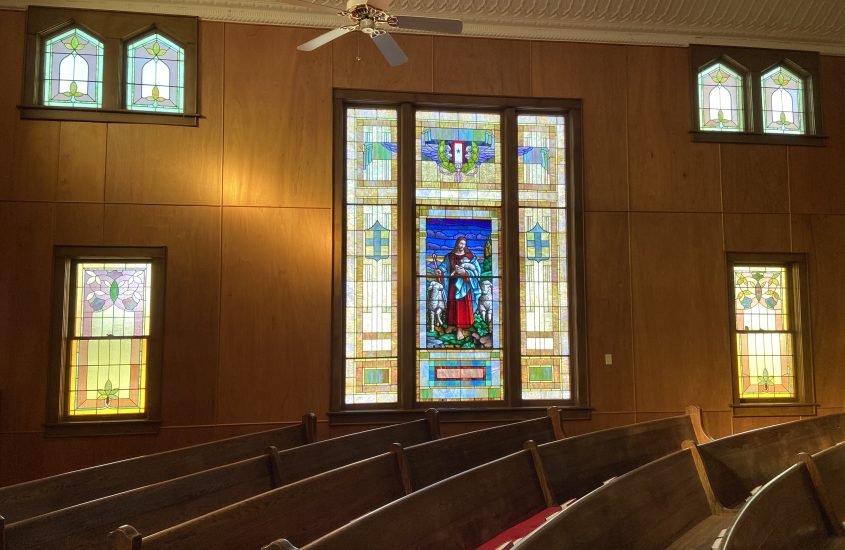
Your teen needs sacred space. By the look of your schedule, I’m guessing you hadn’t thought of that.
Your teen needs adults who will listen and not have every answer. Someone who remembers what it felt like to be young. Someone who welcomes questions instead of fearing them. Someone who can say, “I’ve had doubts too,” or “There were seasons when God felt silent, but looking back, I can see he never left me.”
Teens need places where they can slow down enough to hear their own thoughts. Places where they can ask their hardest questions without being shamed. Places where they can wrestle with doubt, disappointment, grief, and hope. Places where they can discover that faith isn’t pretending to have all the answers, it’s learning to trust God while you’re still asking the questions.
Teens are searching for something their endless scrolling can never give them. They are looking for wonder. For peace. For mattering. For enchantment too.
Both of these exist in churches. They exist wherever trusted adults make room for honest conversations about God and life and a place where chaos slows down.
I’ve been a youth pastor since 1981. I’ve watched generations of teenagers grow into adults. I’ve seen them grow in their faith, leave their faith, and return to their faith. I’ve sat with teenagers carrying burdens no one else knew about. I’ve heard all of the questions.
It is a fact that today’s teens are different from previous generations. Devices, which have turned our teens into customers to mega corporations, have created a new reality of figuring out the upheaval years of adolescent development. Teens still need adults who will notice them. Teens more than ever need to find sacred spaces.
A church with these two elements is a priority on the schedule. It may be a battle to keep that schedule but you need to fight that battle. This one is worth it.
The long-term benefits aren’t just that a teen “stays out of trouble” or “keeps going to church.” Sacred spaces and caring adults shape the kind of person they become. Over time, they provide what psychologists call secure attachment and what the Bible describes as growing “to maturity in Christ.”
Here are some of the biggest lifelong benefits:
- Teens develop a secure identity. Teens learn they matter to God who is their Creator. Mattering means your life matters, no matter what. Importantly, mattering isn’t earned. Mattering is given. Something outside of you validates you as worthy. A sacred space reminds you that you are a part of something larger.
- Teens learn how to process life instead of avoiding it. Listening adults teach teens that confusion, grief, doubt, failure, and disappointment don’t have to be hidden. They learn to name what they’re feeling, ask good questions, and move through hard seasons rather than numbing themselves or pretending everything is fine.
- Teens build resilience. Every teenager will experience setbacks. Those who have trusted adults beside them are more likely to recover from failure because they’ve learned they don’t have to face hardship alone.
- Teens discover that questions belong in faith. Many adults assume questions weaken faith. The opposite is often true. Teens who have safe places to ask honest questions often develop a deeper, more durable faith because it has been tested rather than inherited. These doubts don’t end when you turn 18, right? What a lesson to learn during the malleable teen years.
- Teens experience healthy relationships. Caring adults model what trust, forgiveness, healthy boundaries, humility, and encouragement look like. Those experiences shape how teens later become spouses, parents, friends, coworkers, and leaders.
- Teens become better decision-makers. Instead of reacting impulsively or following the loudest voice, they learn to slow down, seek wisdom, listen to trusted people, and consider God’s perspective. Those habits will serve them for the rest of their lives.
- Teens learn they are never alone. One of the greatest gifts of a sacred community is the realization that someone notices when you’re missing, celebrates your victories, grieves your losses, and prays for you when you don’t have the words yourself.
- Teens become the adults they once needed. Perhaps the greatest long-term benefit is that teens who experience sacred spaces often create them for others. The teenager who was listened to becomes the adult who listens. The teenager who was welcomed becomes the adult who welcomes. Grace tends to reproduce itself.
These reasons as well as the well-being of your teen right now is why I beg you, parents, to keep church on your schedule.