

Will Your Daughter Be Sold What Beauty Is or Taught What Beauty Is?
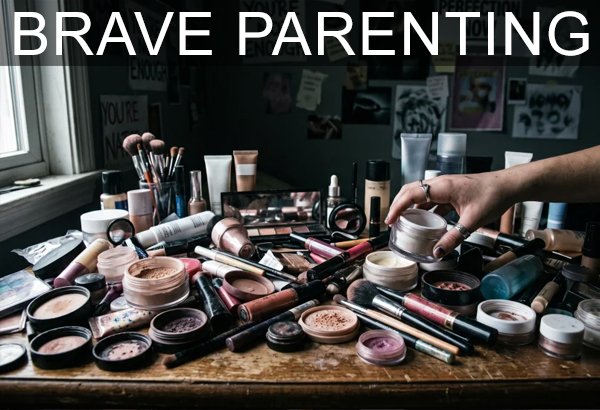
There is lots of money to be made off of your daughter. She is being sold beauty.
Back in 2005, Scott Westerfield wrote a young adult dystopian novel series about Uglies. The first book is called Uglies. There are four books total in the series, but don’t bother reading the fourth one, the story arc concluded in the third one.
The story follows Tally Youngblood, a 15-year-old girl living in a future society where everyone is considered an “Ugly” until their 16th birthday. At that point, they undergo mandatory cosmetic surgery that transforms them into stunningly beautiful “Pretties.” After the operation, they move to New Pretty Town, where life is full of parties, luxury, and fun.
Like most teenagers, Tally eagerly counts down the days until her transformation. She believes becoming Pretty is the key to happiness and belonging.
Everything changes when she meets Shay, another girl her age who doesn’t want the surgery. Shay introduces Tally to a different way of thinking and tells her about the Smoke, a secret community of people who have rejected the Pretty operation and chosen to live freely outside the cities.
Before her scheduled surgery, Shay runs away to join the Smoke, leaving Tally directions in case she ever wants to follow. When Tally’s own operation is unexpectedly postponed, she discovers that the authorities know Shay escaped. They give Tally an impossible choice: either help them find the Smoke or never become Pretty.
Desperate to have the future she has always wanted, Tally reluctantly agrees. She follows Shay’s clues into the wilderness, intending to betray the community.
The plot is great, right? Read the series. Please have your teen girls read the series. Except for the fourth book. It was dumb.
Of course while living with the Smoke, Tally realizes beauty is something far deeper. I want our teen girls to learn this.
When Uglies was published in 2005, Instagram didn’t exist, TikTok was years away, and influencers weren’t yet a cultural force. Yet Westerfeld imagined a world where appearance determined social status; beauty standards were enforced by society; people longed to become an idealized version of themselves; conformity was rewarded; and entertainment distracted people from asking difficult questions.
Well, we are here today aren’t we? And our girls are suffering.
Compare this to the research Freya India did for her debut book, Girls: Generation Z and the Commodification of Everything. This book is haunting. I was a youth pastor through all of this. I wish I had her wisdom then. So does Freya India because she grew up in the midst of this as lost as she could be.
Facetune launched in 2013. This is an editing app for social media to change the flaws in your face. This is eight years after we read this futuristic message about the Uglies being the true version of you and who can change the world.
With Facetune, Freya India found users leaving these comments:
after i facetune myself, switching back to the old image makes me look deformed—even if it was a selfie i thought was cute beforehand. after enough edits my real face seems like it looks freakish, like every flaw is magnified by ten.
i don’t post the pictures i facetune anywhere, but i can’t imagine how ramped up this effect would be if you received tons of compliments and attention for showing the facetuned you. i really think this would be enough to make anyone develop body dysmorphia.
Or this one:
i don’t know how to explain it well, but basically i just feel so ugly that i feel i don’t even deserve to be categorized as a girl, just seeing all the soft, pretty girls around me then looking at myself in comparison, i feel sick that something like me has invaded their space, that i’m allowed to exist alongside them looking like how i do. it doesn’t help that i’m already not very feminine to begin with (whether that’s just how i naturally am or if it’s a product of my own deep insecurities is a conflict in itself though). it genuinely brings me to tears especially when i think of my mom and how disappointed she probably is that her only daughter turned out to be hideous. –Freya India, Girls, p. 52
My heart breaks…
Us women and girls have always been insecure about our looks. The fear of not being pretty enough for the boy you like is something we remember all of our lives. I do, at least. Still.
Freya India writes in response:
“Except those insecurities are being intensified until they feel unmanageable. Girls today aren’t just feeling a pang of insecurity at the occasional image in a beauty magazine or passing billboard. Now, for every flicker of insecurity, there is an app, an ad, an influencer ready to capitalize on it and feed them exactly what will make them feel worse. Linger over this content long enough and girls will be relentlessly reminded of what is wrong with their faces, their skin, their hair, their bodies, their smiles, before being hitched to a conveyor belt of products and procedures promising to fix them.” –Freya India, Girls, p. 55
The dystopian future is here and is being sold to our girls. Who is helping them discern what is the truth about beauty? Who doesn’t have a financial agenda to gain at our girls’ expense?
Our teen girls need sacred spaces where they can discover who they already are—no financial agenda attached. They need adults who look beyond their appearance, achievements, and mistakes and remind them, over and over, “You are deeply loved. You matter. You don’t have to earn your place here.” No financial agenda attached.
The truth is that today’s algorithms are every bit as powerful as the surgeries in Uglies. If we don’t intentionally create places where those messages are challenged, the loudest voices will disciple them for us. Our girls will ruminate on these thoughts, post them for strangers to see, and we who care the most will never know.
Intentionally talk about this. Read the Uglies series together. Read Girls together. Neither are Christian-authored books. Both create conversations our girls desperately need.
Interesting sub-plot from the Uglies series is that everyone becoming beautiful didn’t solve insecurity. Notice that too.
Here are great conversation questions to start with:
- What is beauty?
- Who gets to define “normal”?
- Is comfort always good?
- How much freedom are we willing to trade for security?
- Can technology quietly shape who we become?
- What makes a person valuable?
- Is identity something we create or something we receive?
- Does changing the outside heal the inside?
- Can a culture obsessed with image lose sight of what truly matters?
When you were ruminating deep inside your own bedroom as a teen, don’t you wish someone had this conversation with you? Be that blessing. Please.